1. Introduction: Voices from the Ground
This report is a searing indictment of the disconnect between the corridors of power and the dusty streets of La, Teshie, Nungua, and Osu. As we navigate the midpoint of March 2026, the data collected from our communities is no longer a collection of statistics—it is a collective scream for survival.
The objective of this synthesis is to bridge the chasm between the cold metrics of national policy and the lived trauma of the citizenry. We present these findings not as mere feedback, but as an urgent mandate for reform. The stakes are human lives, and as this report reveals, the patience of the Ghanaian people has been exhausted by promises that do not put beds in hospitals or water in pipes.
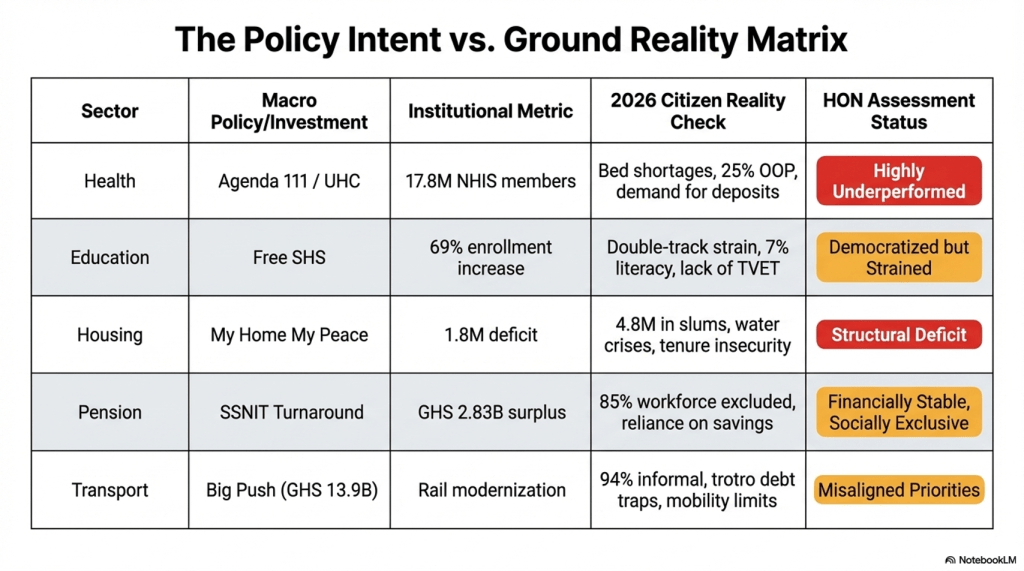
2. A Healthcare Abyss: “Treatment Before Deposit” and the NHIS Gap
Our healthcare system has devolved into a lottery where the prize is survival and the entry fee is a cash deposit. The “No Bed Syndrome” continues to claim lives, with citizens in Teshie and Labadi reporting patients treated on benches or turned away during catastrophic emergencies. The data screams of a citizenry living on the edge of a healthcare abyss, punctuated by the heartbreaking reality of a father in Labadi whose young son is now paralyzed simply because a deposit was demanded before life-altering spinal surgery.
To stem this tide of avoidable death, the community demands:
- Infrastructure Completion: The immediate, non-negotiable completion of the La-General Hospital.
- Emergency Logistics: A massive influx of functional ambulances and modern medical equipment to rural and coastal clinics alike.
- A “Life First” Mandate: The institutionalization of a “treatment before deposit” policy to ensure financial status never dictates medical priority.
Citizen Perspectives on Healthcare
| Theme | Primary Concern | Direct Message to Minister |
|---|---|---|
| Emergency Access | Critical lack of admission space/equipment. | “Provide more beds for hospitals; people die because hospitals have no beds and can’t admit them.” |
| NHIS Efficacy | Insurance is functionally “useless” for major needs. | “The health insurance only covers for paracetamol; there should be more of its use.” |
| Financial Barriers | Prohibitive costs of labs and medications. | “Admitting and treating a patient should be done before taking any advance.” |
| Professionalism | Abusive or negligent treatment by staff. | “Doctors and nurses should treat patients with care and respect.” |
Even for those with active NHIS cards, the system is failing. Respondents report that the insurance is essentially “useless” as it fails to cover “important medications” and “essential lab tests,” leaving even the “insured” to drown in out-of-pocket expenses.
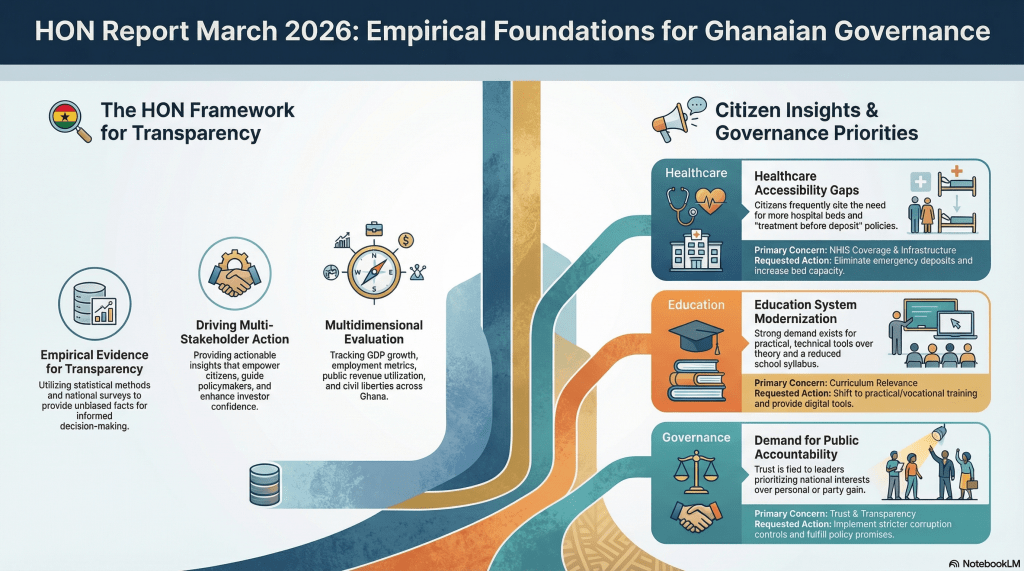
3. Education in 2026: The Literacy-Utility Gap
The consensus on education is clear: the current system is broad in reach but shallow in depth, failing to prepare the next generation for a volatile economy.
- Curriculum & Syllabus Overload: There is an urgent call to “reduce the syllabus.” Parents are overwhelmed by “too many textbooks” and subjects. The “double track system” remains a primary grievance, viewed as a barrier to consistent, quality learning.
- The Technical/Vocational Shift: The data reveals a desperate hunger for “agricultural, technical, and handed skill” training. Citizens want an education system that builds “technical and vocational schools” to ensure graduates are not just degree-holders, but earners.
- Discipline and Digital Distractions: A sharp divide exists between those demanding a return to “canes” for discipline and those pleading for “digital learning tools.” A specific, growing concern involves the use of WhatsApp for assignments; parents in Teshie report that students are “taking advantage” of these digital groups for non-educational distractions, further eroding classroom focus.
Furthermore, there is a chilling community sentiment regarding the “dangerous and indisciplined children” emerging from the free education system, with residents expressing fear for the safety of both students and teachers.
4. Housing and Living Standards: The Rent Trap and Ashaiman’s Quiet Terror
Housing in March 2026 is a source of profound mental and financial strain. We have identified the top four challenges facing our communities:
- High Cost of Rent and Corrupt Landlords: Rent is viewed as an extortionate cycle, with landlords and agents operating without oversight.
- Chronic and Irregular Water Supply: In La and Teshie, water access is described as “irregular” and “inconsistent,” forcing families to spend precious resources on private tankers.
- Filthy Environments and Sanitation: Choked gutters and “filthy environments” remain the norm, leading to a decline in public health.
- Security and Armed Robbery: In areas like Ashaiman, the “quietness” of the neighborhood is not a virtue but a danger. Residents link the high rate of armed robbery directly to a lack of local development, poor lighting, and a total absence of security infrastructure.
While most view “Community Housing Cooperatives” with a hesitant “Maybe,” there is a clear segment of the informal sector pleading for “pay-as-you-own” options to escape the predatory rent market.
5. The Pension Trust Deficit: Betrayal of the Aged
Economic security in old age is no longer expected from the state; it is a DIY project. With a profound “No trust” sentiment toward the national pension system, citizens are looking inward for survival:
- Informal Safety Nets: Reliance on small business income, properties, and “investment in children” has replaced faith in formal structures.
- The Pensioner Plea: The data highlights a desperate need for the state to “pay more attention to pensioners,” who currently feel abandoned by the system they served.
- Union Interest: There is significant appetite for informal sector unions, provided they offer “medicine insurance” and “multiple income” benefits to shield workers from the volatility of the market.
6. Governance and Accountability: A Seizing of Trust
The current political atmosphere is one of exhaustion. Citizens overwhelmingly believe that leaders prioritize “personal or party interests” over the public good. This trust deficit has led to a surge in support for “qualified, non-party independent candidates” who are seen as the only alternative to partisan paralysis.
To rebuild any semblance of trust, the citizenry demands:
- Aggressive Accountability: A transparent focus on “holding and prosecuting people who have caused financial loss to the state.”
- Job Creation: Meaningful employment for graduates to prevent the youth from turning to “money rituals” out of desperation.
- Price Control: Immediate intervention to lower the cost of living and the price of basic goods.
7. Conclusion: The Road Ahead
The overarching sentiment of March 2026 is one of a resilient, self-reliant population that feels fundamentally forsaken. The Ghanaian people are not asking for miracles; they are asking for the fulfillment of basic social contracts.
Leadership must act immediately to implement measures that enhance the standard of living. This starts with price control on basic goods, aggressive job creation for our graduates, and the reconstruction of roads and drainages to prevent the seasonal destruction of our communities. The time for rhetoric has passed; only the tangible delivery of beds, water, and justice will suffice.
 Mind the GAP
Leave a comment